Thursday, October 27, 2005

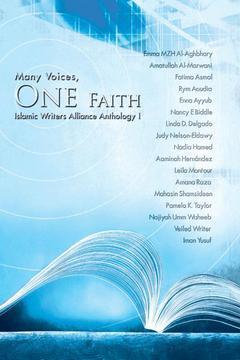
MANY VOICES ,ONE FAITH!


MANY VOICES ,ONE FAITH!


Muslim Women Writers Reveal Their Thoughts on Daily Life, Politics, War, and Religion in the New Anthology Many Voices, One Faith

San Francisco, CA, July 16, 2005—With reflections on the challenges of practicing Islam in a world that is often hostile to its adherents and what it means to be a Muslim, Many Voices, One Faith is an anthology of poetry, short fiction, non-fiction, and works for children written by Muslim women of a variety of ethnic, racial, and cultural backgrounds. At times poignant, at times humorous, sad, angry, joyful or grieving, Many Voices, One Faith provides a glimpse into the multifaceted world of today’s Muslimah.

“Many Voices, One Faith is unique in that it is a publication of writing by Muslim women about a wide variety of topics — Muslim women talking about Muslim women, about children, about politics, war, marriage, mental health, religious and spiritual experiences. It is a collection that reveals the diverse experiences of Muslim women,” says Pamela Taylor, Publications Officer of the Islamic Writers Alliance.

“It is our hope that non-Muslims will gain insight into the struggles, the joys, the thoughts and feelings of their Muslim neighbors,” she adds. “So much of what we see in the media presents a single stereotype – Muslim women wearing long, loose, dark-colored robes and black scarves, without any real personality. It’s refreshing to see a new perspective.”

“This anthology has historical significance, emerging from today's multi-ethnic
American Muslim landscape and featuring the voices of promising writers who
have been working seriously on their craft in writerly communities,” says Mohja Kahf, Professor of Comparative Literature at the University of Arkansas and author of Emails from Sherezade. “As American Muslim culture continues to grow in all its facets, we will likely see many more literary anthologies; here are the brave early risers.”

Early reviews of the book have been overwhelmingly positive. “It is absolutely beautifully written,” writes one reader, Umm Raiyaan from the UK. Another, Linda, from the US, says, “I wanted to say thank you again for the wonderful book. I’ve been reading the poetry this week and it is absolutely wonderful. I am sooooo enjoying the reading.”

Review by Br.Yahiya Emerick :

"One Faith, a production of the Islamic Writers Alliance, is a fascinating collection of poetry, short stories, plays and prose written by a wide variety of very talented sisters. This wonderful assemblage is organized to take the reader through a journey of the heart, imagination and mind, even as its structure of poetry, stories and plays are grouped likewise. The issues that are presented, from the universal longing for peace to the struggles of interfaith dialogue, speak to today's readers, both Muslim and non-Muslim. Through riveting and poignant verse we journey through a stunning cross section of today's emerging voices in the budding field of English Islamic literature. I would highly recommend this book for junior high through adult readers, and would also suggest that Islamic schools make it a part of their English Language Arts reading curriculum."

-Yahiya Emerick


Authors included in Many Voices include: Emman MZH Al-Aghbhary, Amatullah Al-Marwani, Fatima Asmal, Rym Aoudia, Enna Ayyub, Nancy E Biddle, Linda D. Delgado, Judy Nelson Eldawy, Nadia Hamed, Aaminah Hernández, Leila Montour, Amana Raza, Mahasin Shamsideen, Pamela K. Taylor, Veiled Writer, Najiyah Umm Waheeb, and Iman Yusuf

Some have previously written for publications such as Azizah Magazine, The Minaret, Islamic Horizons, MuslimWakeUp.com, Islamonline.com, Message International, Mirror International, and Muslims Weekly. Others have published novels and children’s literature.

Many Voices, One Faith took shape through the work of the Islamic Writers Alliance (IWA). The IWA is a group of Muslim women dedicated to writing about, presenting, and promoting positive Islamic fiction and non-fiction reading materials. The proceeds of this IWA anthology will support the activities of the IWA and will be funneled to purchase books for the libraries of Islamic schools. The IWA hopes to enrich the lives of Muslim readers, to reach out to non-Muslim readers, and to offer a platform for new writers alongside some well-known Muslim authors.

Established in January 2004, the IWA has members at various stages in their writing careers, from little known and talented authors on the path to publication, to newly published writers, to pros who have been publishing for decades. The IWA includes Muslim women from all backgrounds, ethnicities, and theological bents. We also encourage writers in all genres—from poetry to science fiction to journalism. For more information about the Islamic Writers Alliance, please visit our website: www.islamicwritersalliance.net.

Many Voices, One Faith
ISBN
1933037180 Paperback
1933037474 Hardcover

Contact:

Islamic Writers Alliance
www.islamicwritersalliance.net
Widad Delgado, Director
woodad@mindspring.com
Pamela Taylor, Publications Officer
momtotsan@yahoo.com


Heliographica Press
866-272-6187
info@heliographica.com
www.heliographica.com

Monday, September 26, 2005

My Best Friend


As Salaamu Alaikum

The follwoing is a diary entry of 14 yr Muslimah

My Best Friend
By Amatullah Abdullah

Dear Diary ,

When I hear anyone telling me about their best friend, I would feel "Oh I wish I had a friend like that!"

The fact is I had many friends. They were countless. Whomever I meet ,I called them my friend but I never had any best friend in my life. I saw my mother, my sisters, my brothers, my cousins, my classmates, etc talking about their friends and heard them talking about the strength in their bond of friendship. Many times I heard them say to each other " We have been through a lot together, we shared good times and bad times, laughter and tears, and no matter what, we were there for each other." These words made me yearn to have a best friend. I realized best friends are a blessing from Allah , subhanahu wa ta`ala (the Exalted and Glorified) and no matter what we do we cannot earn best friends unless Allah (swt) wills. A year back I was too silly that I used to have an imaginary friend who I always shared my feelings with and made everybody believe that this friend was real. My imaginary friend was my best friend who was with me during times of joy and hardship.

Sometimes I would not have control over my tears and it would flow through my cheeks and would drench my scarf. I wondered why? I then realized it is because I lack something precious in life…A BEST FRIEND! No imaginary friend can replace a real friend. I became desperate and wondered " Am I so cruel that nobody wants to be close to me even if I try to be close to them?" I sunk deep inside but never showed my emotions and pretended I didn't give way to my emotions.

I cried so much when I was alone! One day when I was crying for a friend, suddenly fears of shiver ran up my body…

I wondered why? Then felt a voice inside me saying,

"Stop!…Stop this nonsense!….How can you cry? And Why are you crying?…Don't you know Allah is the Walee of the believer?…Are you a believer?…If so then stop! And talk to your Best Friend!"

" Allah is the Walee (The Protector) of those who believe and takes them from darkness into light." (Qur'an 2:257)

SubhaanAllah!(Glory be to Allah)
He (Allah (swt), my Protector and my Friend) had been there with me even before I was born. He is there for at all times. He would never abandon me. His word (Qur’an) is a source of encouragement, hope and a counsel for me …He is The Best of all best friends anybody can have!

And I know my Best Friend will surround me with many more companions in the Hereafter. I will ask Allah (swt) to surround me with friends like Fathima ,radi Allahu `anha (may Allah be pleased with her) bint Muhammad salla Allahu `alayhi wa sallam (peace and blessings be upon him), one of the noble woman in the entire world ,because I read her story was so impressed and touched by her wonderful noble quality!

Now will I say " Oh I yearn for a best friend!”?

No! I will try my best to work according to the way my Best Friend advised and InshaAllah I will get to see my other friends like Fathima (ra) bint Muhammad (saws) in the Hereafter!!!

Saturday, September 17, 2005

The Prophet’s Compassion for Children


Alhamdulilah! one of my article entitled:

The Prophet's Compassion for Children

is published on Islam online.net (IOL)

Here is the link : The Prophet’s Compassion for Children


The Prophet’s Compassion for Children
By Amatullah Abdullah

Children are a great blessing from Allah. With their tender hearts, children can be molded into righteous people only with a positive and tender approach. Islam considers children to be an amanah (trust) given to the family and says it is fard (obligatory) for the family to raise a child in a righteous manner. One should not favor one child over another. In Islam, both male and female children should be treated equally and should be loved and cherished. The children have certain rights over their parents; it is the family’s obligation to shelter, feed, clothe, educate, support, nurture, and love them.

In today’s world many parents are so immersed in worldly life that they forget to pay attention to their children. Many parents think that providing financial support for their child is enough. The fact is, financial support alone doesn’t fulfill a parent’s duty towards their child. One can only win a child’s heart through love and a gentle attitude. It is the child’s right to be loved and cherished.

I remember that, as a child, I yearned for the attention of my family, but being in a joint family—my family and my uncle’s family lived together and a few other cousins stayed with us as their parents were working abroad—did not give me the opportunity to experience the kind of attention I expected. My parents felt that they should not express their love for their children in front of others, as people might think they were favoring us. As a child (and even now), I heard people saying “We need not to express our love to prove that it is there, it is enough to have a loving heart.” But the fact is that only when one expresses love to a child will the child feel more confident and stronger. Children have the capacity to easily distinguish when there is a difference in the attitude of the adults. Whether an adult shows or does not show love will have a significant impact on a child. Hence, we adults have to be conscious with our behavior in the child’s presence and be constantly aware of the emotions we project to our children.

Nowadays, we see people have become hardhearted so that their attitude towards children is unpleasant. There are some who show much partiality toward one gender, and there are some who don’t treat others’ children with the same kindness or affection which they show to their own children. It is common to see even people who claim that they act on the Qur’an and Sunnah showing less interest in playing with their children or giving them the due attention or expression of love.

The Prophet (peace and blessings be upon him) is the model for the whole of humankind. His attitude towards children was always compassionate and merciful. Being fond of children, Prophet Muhammad showed great interest in playing with them. His involvement in children’s games shows us the great importance in playing with our children. He would have fun with the children who had come back from Abyssinia and tried to speak in Abyssinian with them. It was his practice to give lifts on his camel to children when he returned from journeys.

Prophet Muhammad never held back his love for the children and always expressed his fondness to them. In one hadith Abu Hurairah (may Allah be pleased with him) narrated:

I went along with Allah’s Messenger (peace and blessings be upon him) at a time during the day but he did not talk to me and I did not talk to him until he reached the market of Banu Qainuqa`. He came back to the tent of Fatimah and said, “Is the little chap (meaning Al-Hasan) there?” We were under the impression that his mother had detained him in order to bathe him and dress him and garland him with sweet garland. Not much time had passed that he (Al-Hasan) came running until both of them embraced each other, thereupon Allah’s Messenger (peace and blessings be upon him) said, “O Allah, I love him; love him and love one who loves him.” (Muslim)

Anas ibn Malik (may Allah be pleased with him), the servant of the Prophet, had another recollection:

I never saw anyone who was more compassionate towards children than Allah’s Messenger (peace and blessings be upon him). His son Ibrahim was in the care of a wet nurse in the hills around Madinah. He would go there, and we would go with him, and he would enter the house, pick up his son and kiss him, then come back. (Muslim)

The Prophet’s love for children was not restricted to his children and grandchildren. The scope of his mercy and affection embraced all children, and he showed the same interest and gentleness to his Companion’s children. The following hadith narrated by Usamah ibn Zaid (may Allah be pleased with him) shows this humane aspect of the Prophet’s personality:

Allah’s Messenger used to put me on (one of) his thighs and put Al-Hasan ibn `Ali on his other thigh, and then embrace us and say, “O Allah! Please be merciful to them, as I am merciful to them.” (Bukhari)

Some people who were not able to understand the power of expressing love to children wondered why the Prophet (peace and blessings be upon him) played with children and took such an interest in them. Narrated Abu Hurairah (may Allah be pleased with him),

Allah’s Messenger kissed Al-Hasan ibn `Ali while Al-Aqra` ibn Habis At-Tamim was sitting with him . Al-Aqra` said, “I have ten children and have never kissed one of them.” The Prophet cast a look at him and said, “Whoever is not merciful to others will not be treated mercifully.” (Al-Bukhari)

The Prophet was always concerned about everyone’s thought and feeling. The following hadith narrated by Anas ibn Malik (may Allah be pleased with him) proves his thoughtful character:

The Prophet said, “(It happens that) I start the prayer intending to prolong it, but on hearing the cries of a child, I shorten the prayer because I know that the cries of the child will incite its mother’s passions.” (Al-Bukhari)

The Prophet was always patient and considerate with children and took great pain not to hurt their tender feelings.

Narrated Abu Qatadah: “The Messenger of Allah came towards us while carrying Umamah the daughter of Abi Al-`As (Prophet’s granddaughter) over his shoulder. He prayed, and when he wanted to bow, he put her down, and when he stood up he lifted her up.” (Al-Bukhari)

In a another hadith,

Narrated Umm Khalid: I (the daughter of Khalid ibn Said) went to Allah’s Messenger with my father and I was wearing a yellow shirt. Allah’s Messenger said, “Sanah, Sanah!” (`Abdullah, the narrator, said that sanah meant “good” in the Ethiopian language). I then started playing with the seal of prophethood (between the Prophet’s shoulders) and my father rebuked me harshly for that. Allah’s Messenger said, “Leave her.” The Prophet, then, invoked Allah to grant her a long life thrice. (Al-Bukhari)

In another narration we see the Prophet’s tolerance towards children.

Narrated `A’ishah: The Prophet took a child in his lap … and then the child urinated on him, so he asked for water and poured it over the place of the urine. (Al-Bukhari)

Finally I would like to add another saying of the Prophet that proves that Muslims should be conscious to treat their sons and daughters justly:

“Fear Allah and treat your children [small or grown] fairly (with equal justice).” (Al-Bukhari and Muslim)

From all the above hadith we see Prophet Muhammad’s attitude toward children is an example for the whole human race that shows how to treat them and cherish them at all times.

Friday, September 16, 2005

Marriage: It’s your choice!


Marriage: It’s your choice!

By Amatullah Abdullah

Saleema was sitting on the bed in her bedroom, staring at the beautiful red sari which had rich jardosi embroidery on the borders.

"Saleema baaji … Saleema baaji!" Sabeera sounded excited as she entered Saleema’s room.

"Baaji , guess what?!…." The excitement in her tone increased

"Papa has agreed to take me to perform Hajj after your wedding…"

Saleema forced a light smile and said in a low voice," "Oh that’s good Sabeera. I am happy for you."

"Baaji you don’t sound too good… are you ok?" Sabeera asked with concern.

"I’m ok, don’t worry …I haven’t slept properly for the past two days so I’m just tired," Saleema patted her sister’s head and smiled.

"Oh ok! I understand , you’re gonna be married in a week, so you must be nervous and excited and the excitement is not allowing you to sleep I guess! "Sabeera winked at her sister. Her eyes fell on the red sari.

"Wow this is so beautiful baaji, you’re gonna look like a doll in this sari!" Sabeera exclaimed pointing to the red sari on Saleema’s bed.

Saleema smiled, "Is Ummi back from mousy’s house? "

"Not yet," Sabeera answered, "I just got a call from the tailor and she said she would finish Ummi’s sari in another two days. I wanted to inform Ummi about this. Please inform her about this because I might forget. My memory hasn’t been good for the past few days" Saleema told her.

"Sure Baaji I’ll do that, but now I better go and clean my room before Ummi comes!" Sabeera pecked a kiss on her sister’s cheek and left her room.

Saleema was alone. She latched her door, leaned against it, and closed her eyes, tears gushed from her eyes flowing on her cheeks. Her heart told her, "Saleema, you have your freedom of choice, you have the right to choose and you need to express your feelings before it is too late. Marriage is for tranquility. Will you have tranquility in this marriage, which you don’t want?"

Saleema asked herself, "but how will I tell them, what if they alienate me and hate me for expressing my feelings about this man?" She struggled with her heart, which was insisting her to express her feelings. Finally, she decided to tell aunt Najeeba, her father’s sister who she considered to be the most understanding and considerate member in the family.

After an hour had passed, Saleema heard her mother’s voice downstairs and went down slowly on the steps to speak to her mother. Saleema’s mother came back from her aunt’s house. She brought a dazzling traditional jewelry set for her to wear on the wedding day.

"As Salaamu Alaikum , ummi…" Saleema said softly. Her mother turned around with a big smile on her face when she saw Saleema.

"Wa Alaikum Salaam. Saleema, look at this! I got this jewelry set for you. See whether you like it?"

"It’s beautiful," Saleema said with a smile.

"I know, and you will look gorgeous in this. I can’t wait to see you as a bride!" her mother was euphoric at the thought.

Saleema smiled faintly and said "Ummi, will mousy be coming home today….?" before she completed her sentence, she heard the door bell. Saleema answered the door hoping and wishing that it would be Aunt Najeeba and it was…

"As Salaamu Alaikum!" Najeeba greeted as she entered the house.

Saleema was glad that her aunt came and hugged and kissed her, "Wa alaikum salaam mousy. I knew you would be coming today …"

Najeeba laughed and said "I come here almost every day, especially since your wedding got fixed. Tasneem would not leave me even if I don’t come…" pointing to her mother.

Tasneem laughed and greeted her "As Salaamu Alaikum, of course, how could I leave you? You are not only my SIL but also my best friend and the bride’s to be aunt." Najeeba sat on the sofa with a huge grin and remarked to Saleema, "So, you must be counting your days now…"

Saleema sat quietly next to her aunt. Her mother and aunt were busy discussing the wedding and other ceremonies, which would be held before and after the wedding. Indian weddings have a lot of add-on ceremonies; a mehndi function, another reception after the wedding, etc.

Saleema pretended to read a magazine till her mother left to set the table and prepare lunch for them. Saleema was alone with her aunt Najeeba. She became restless and was wondering how to approach the subject about her feelings for the man who she is going to marry. Najeeba noticed Saleema’s restlessness and asked her "Do you want to say something Saleema?"

Najeeba could sense Saleema’s attitude as Saleema usually poured out her feelings and thoughts only to her aunt. Saleema always approached Najeeba if she had any problem and needed counsel.

"Yes mousy , I want to talk to you alone" she said. Najeeba got up, saying "Okay let’s go to your room." They both went to Saleema’s room and Saleema latched her door. Najeeba was looking at Saleema with worry.

"What is it Saleema ?" she asked. Saleema was thinking of how to start the topic and then said , "It is about my wedding Mousy."

"What about it?" Najeeba asked

"Oh mousy I really don’t know how to start…" Saleema’s eyes were filled with tears, "Mousy let me be honest with you. I don’t want to marry Ahmed"

Najeeba was shocked to hear this; her eyes widened. "But why, what’s wrong with him?"

"I grew up with him Mousy and my heart has always seen him as my own brother and now suddenly everybody says I am gonna marry him and my marriage date is fixed without my permission." Saleema said tearfully.


"My heart is not inclined towards him. I cannot accept him as my husband. Oh please Mousy help me," Saleema pleaded.

"Saleema sweetie, the marriage is fixed and now don’t you think it is too late…" Najeeba said softly. Saleema’s tone rose, "Mousy it will be too late only after marriage!" she busted into tears.

Najeeba hugged her niece and said, "Sweetie, even I had the same feeling when I married my husband but in course of time I started getting comfortable with him especially after having children…"

"What if I end up not being compatible after marriage?" Saleema asked her hurriedly

"But you will… I was not happy for 15 years but now I am happy, in fact very happy," Najeeba said trying to persuade her.

"GOOD!" Saleema said irritably.

"So you want me to marry him and wait till I become forty to have a comfortable married life?" Saleema was angry and disappointed, "I thought you would be the only one who would understand me." She added, sadly, "Nobody asked my permission Mousy. Everybody arranged this and then they come and tell me that I am gonna marry Ahmed and my marriage is fixed."

"I do understand sweetie but this is our culture. We all went through the same thing which you are going through," Najeeba said pathetically and hugged her niece.

"So I HAVE to marry him and I have no other choice?" Saleema asked desolately.

"Yes sweetie, being born as girls, we need to be patient and undergo all this. Allah will reward you for your patience," Najeeba said. Saleema was unable to hold back her tears and cried so much that Najeeba’s sari blouse got soaked with them. Najeeba kissed Saleema and tried to pacify her…

* * *


Islam, a way of life, is a religion that is moderate and balanced. Islam has the Qur’an and Sunnah to guide the people. Now what does Islam say about this situation?

Narrated Khansa bint Khidam Al-Ansariya, that her father gave her in marriage when she was a matron and she disliked that marriage. So she went to Allah’s Apostle and he declared that marriage invalid. (Bukhari Volume 7, Book 62, Number 69)

He (saws) also said:

"The widow and the divorced woman shall not be married until their order is obtained, and the virgin shall not be married until her consent is obtained." (AlBukhari)

"Whosoever has a daughter and he does not bury her alive, does not insult her, and does not favor his son over her, God will enter him into Paradise." (Ibn Hanbal, No. 1957).

Marriage is a beautiful and a sacred bond which allows each spouse to live in tranquility.

"And among His signs is this, that He created for you mates from among yourselves, that you may dwell in peace and tranquility with them, and He has put love and mercy between your (hearts): Verily in that are signs for those who reflect." (Qur’an 30:21)

There are thousands of "Saleemas" in different parts of the world. They are forced into marriages and the result is that they too ruin their own daughters’ lives. Parents or guardians need to reflect on the words of Prophet Muhammad and the Noble Qur’an before they give in to their culture, if they call themselves Muslims.

After knowing what the Prophet (saws) said, can we still consider forced marriages to be valid in the sight of Allah???

************************

© Amatullah Abdullah 2005.

Monday, September 12, 2005

I Discovered A Friend!


As a writer I wanted to explore different areas of writing. This is my first fiction piece.

I Discovered A Friend!

Aisha was lying in bed 207 in the main block of Sumathi hospital, used by the less privileged in society. The shoddy furnishings that made up the ward exposed the quality of the Hospital. Dark deep cuts ran across Aisha’s pretty face. Salma and Shrin, about 16 stood at her bedside. Their dressings seemed trendy, in line with the latest in teen magazines. Salma was normally a poised young lady, but she looked somewhat uncomfortable on that particular morning.


Aisha looked at Salma and Shrin and asked them in a weak voice, “Where is Chitti?”


“She is outside,” replied Salma.


“Do you want me to call her?” asked Shrin.


“I want to tell her something” Aisha said in a fragile tone.


“You stay with her Salma I’ll go and get Aunt Jamilah” Shrin instructed as she left the room in search of Aunt Jamilah.


Salma nodded.


Salma was left alone with Aisha. She went and sat on the chair, which was near the bed. She placed her elbow on the edge of the bed in which Aisha was lying and placed her hand on her cheeks. Few minutes had passed and still Shrin was not back. Salma lowered her left hand looked at her watch without making it obvious that she was bored. This time, when she raised her head and looked at Aisha, she froze, a tinge of concern and shiver ran through her body when she saw at Aisha’s face losing colour.


“Goodness! What’s going to happen!?” she thought to herself.


Salma stood up and stroked Aisha’s head.


“Don’t worry, you’ll be all right,” Salma said and fought with her tears.


Aisha had been in the hospital for the past 3 days after a truck ran down on her. Salma, reluctant at first to pay her sick classmate a visit, agreed to pay a visit to Aisha in the hospital only after Shrin told her that Prophet Muhammad, may Allah bless him had highly recommended to visit people who are old and sick.


“I’m sorry; because of me everybody’s summer vacation is ruined.” Aisha sounded guilty and sad.


Aisha was always considerate, helpful and concerned about others. Her helpless state caused her more pain than the hurt of her wounds. She always found happiness in helping other. She hated troubling anyone and always preferred to help than being helped. Now being in this plight, she thought she bothered others and this made her feel miserable.


Salma held Aisha’s hand tightly and said “No, not at all. Our dear friend is more important to us than our vacation…”


Aisha’s lips curved lightly into a light smile and said,” Thank you.”


“Salma, can you please open that drawer and take that envelope from there?” Aisha asked

Salma pointing to a table, which was in the corner. The table looked old and crooked with a rusted handle. Salma went to the table that was in the corner, pulled the draw, and took the envelope. It was a white long envelope. Salma was surprised to see that it was addressed to her. She looked at Aisha who nodded,
“That is for you Salma,” Aisha said.


Just then, Shrin entered the room with Jamilah. Jamilah, a woman who seemed to be in her mid forties looked elegant in her black burkha and scarf inspite of her stout stature. Aisha gestured the woman to come and sit next to her.


“Chitti...” she wanted to say something but found it difficult to speak.


“What is it sweetheart?” Jamilah touched Aisha’s cheeks gently.


“Chitthi, they will take me to the operation theatre for my surgery in another one hour….” Aisha paused and then continued. “Before I leave I wanted to tell you something.” She paused again for a minute and then continued, “Since the time I have known you, you have taken care of me like your own daughter. I never saw my parents...” Aisha could not hold back her tears this time. She held Jamilah’s hands and kissed it with her dimmed energy.


“You have been my mother Chitti and you are my mother…only Allah knows whether I will be alive or dead after the surgery,” Aisha told her and fought with her breath.


“Insha’Allah you’ll be fine sweetheart,” told Jamilah holding back her emotions that poured while Aisha spoke.


Jamilah was a strong woman who raised her sister’s daughter after her sister and her brother-in-law died in a car accident. Now, she sees Aisha in the same condition in which her sister and brother-in-law were 14 years back. Though Jamilah had two children of her own, she took care of Aisha who was always obedient and well mannered, like her own daughter. Jamilah was unable to see her beloved niece like this. The doctor had informed them that Aisha would need to undergo a surgery.


“Yes Chitti I do want to live if Allah wills and want to be always helpful to you and everyone,” Aisha said sincerely.


Jamliah hugged her niece, “Insha’Allah you’ll be fine after the surgery…” she kissed her niece’s forehead. Jamilah took her hands away from Aisha.


“No!” Jamilah shrieked.


Aisha was bleeding and she saw blood on her hands and pillow and shuddered. When Shrin saw the blood she almost fainted and Salma froze.


“We need to call the doctor immediately,” Jamilah told Salma. Icy shivers of anxiety ran up Salma’s spine.


“Please call the doctor…” Jamilah cried.


Salma was unable to move and her heart was beating wildly. Shrin dialed the emergency number on the intercom. The doctor arrived with two nurses and checked Aisha’s pulse.


“Hurry we need to rush her to the operating theatre,” the doctor told the nurse.


Before they took Aisha to the operating theatre her pulse stopped and her soul left her body. Jamilah who held back her emotions all this time burst into tears and broke down. Salma remained frozen till she heard Jamilah’s cry. Salma and Shrin tried to help Aunt Jamilah and tried to pacify her…


----------------------------


Salma rang the doorbell. She looked pale and exhausted as though she had not slept for weeks. A tall beautiful and elegant looking woman opened the door.


“As Salaamu Alaikum Salma!” she greeted Salma with a smile.


“Wa Alaikum salaam Amma,” Salma replied in a weary voice.


Anisa, Salma’s mother was in her late thirties. She found the usual warm beautiful smile on her daughter’s face was missing. She looked at Salma worried as Salma went and sat on the cushioned sofa and opened the letter, which Aisha gave her. Anisa saw tears rolling down Salma’s cheeks who was reading the letter,


“I don’t believe this!” Salma cried shaking her head, trying to balance herself physically and emotionally.


“What’s wrong Salma?” Anisa asked her.


“A…A...Ammaa…” Salma could not talk and bursted into tears.


Anisa never saw her daughter crying like this before. She came and sat next to Salma. Salma tucked her head on her mother’s shoulders. Anisa hugged her and patted her back gently.


“Relax sweetie…what happened? I have never seen you crying like this before.” Anisa asked her.


Salma wiped her tears from her cheeks and eyes. Her long beautiful eyelashes were still wet with her tears. Salma gathered her energy to talk to her mother,


“Amma …” She said, “Do you remember Aisha?”


Anisa nodded her head, “Isn’t she the one who always kept calling you up and always invited you to her place.”


“Yes Amma, she is the one,” she said.


“What about her?” Anisa asked.


"She died this morning…” Salma buried her face in her hands and cried.


Anisa immediately said, “To Allah we belong and to Allah we will return.”


And then continued, “What happened …was she unwell?”


Salma said, “She met with an accident. A truck ran down on her and she was admitted in the hospital. The doctor said there was nothing to worry about and we thought she would be fine … she suddenly started bleeding terribly … and she died…I am feeling guilty Amma!”


Anisa hugged her daughter and said, “Sweetie, everybody has an appointed time and it was time for her soul to leave this temporary abode…why do you feel guilty, this is all Allah’s will, nothing can stop anybody’s death.”


“I know Amma …I am guilty because I was a horrible friend!” Salma cried.


Baffled by these words, Anisa looked at Salma. Salma continued with her eyes filled with tears, “Every time she called me, I was annoyed and found her boring. I felt she was unpopular. She did not have the same interest I had…no music, no movies, no fashion…I kept ignoring her and she told me she yearned to have a friend like me and she wanted me to be her friend.”


Anisa was listening to her daughter patiently nodding her head. Salma looked up at her mother and continued confessing her attitude and her behaviour towards her friend when she was alive.
“She was a great friend. She always tried to give me gifts and tried inviting me home so many times. But… I kept ignoring all this and secretly wished she would leave me alone, and spoke ill of her when I was with my other friends. The last time she called me was yesterday and asked me if I could visit her…I became agitated but Shrin insisted that we would go visit her as she is sick.”


“Alhamdulillah, she never knew -- she really thought you were a good friend. At least you gave her that happiness.” Anisa said thoughtfully.


Salma paused and stammered to get the words again to speak, “ W…w…when I… I… I… read the letter she gave me…I feel horrible after reading the words ‘Good friends are precious! Thank you for being my friend’.”


She continued, “The only people around her when she died were me, Shrin and her aunt. She is an orphan so only her aunt was the only relative near her when she died. Her face was so beautiful after her soul left her body.” She raced with her words breathing hard.


She paused and then continued, “Do you know Amma what she wrote in that letter?”


Anisa asked her, “What did she write?” She sounded eager to know the content of the letter thinking that it might be the content which is upsetting her daughter.


Salma said, “The letter said I was her best friend. She was an orphan. She mentioned that she yearned to have a best friend but she never had any, till she met me…” Salma buried her face in her hands and started to cry …


Anisa poured some water into the glass and gave her to drink. After a glass of water she continued,” The truth is, I never treated her like my friend. Friends are supposed to care for each other but I didn’t and instead I spoke ill of her behind her back. I was never proud to have her around me…but to be honest; she was the best friend I have ever had…. She never expected anything from me though she was needy, she was always smiling and helpful and she never hesitated to correct me when I was wrong but I used to hate that and always snubbed her…she always praised me if I did a good job at work.”


“Amma, I have lost a wonderful opportunity of taking her and treating her as my best friend.” Salma said.


“No! Only now you got a friend” Anisa said smiling at her daughter.


“What makes you say that Amma?” Salma asked earnestly.


“Aisha made you realise your faults after her soul left this world. Now every time you do something, you will remember her and her words of advice… won't you?” Anisa asked.


Salma nodded.


“Well, her words are living in your heart and those words are your friend! Salma…A friend is someone who would make us almost invincible and helps us with his or her counsel when we face a problem.”


Anisa added, “Many people will walk in and out of your life; but only true friends will leave footprints in your heart…Aisha has left footprints in your heart which will never be wiped out!”
Salma nodded “Yes Amma, you are right, I have discovered my true friend!”


***********************************************

Amatullah Abdullah 2005.
Thursday, July 28, 2005

Dowry In Islam?!


DOWRY IN ISLAM?!


A woman holds a very high status in Islamic faith. She is honoured and respected at all times, but many startling transgressions have crept into Islamic practice. These transgressions have been caused by cultural influence that has no basis in Islamic scripture.

Muslims living in the Indian subcontinent have slowly incorporated the act of dowry into their lives. Dowry originated in the upper caste Hindu communities as a wedding gift (cash or valuables) from the bride's family to the groom's family. There is nothing strange or unique about a culture influencing Muslim practice, as it is a common characteristic around the globe that when a new religion spreads in an area, people who live in that area retain some of the customs and traditions which they have been practicing for centuries. There is nothing wrong with this as long as those practices do not contradict Islamic law. The practice of dowry, however, does in fact transgress Islamic law.

We usually use the word gift for something, which we give voluntarily, to a person we like. A gift is something that strengthens the friendship bond between two people. Dowry, which is usually defined as a “gift” given along with the bride, by a bride’s family to the bridegroom, is used as tool of coercion and greed in societies like India. The bride’s family must give this “gift” or the marriage will not take place. Always the price of the dowry is set higher than the bride’s family can afford and sadly, this results in the bride becoming a burden on her family. The bride’s family then struggles to pay the “gift”.

In Islam it is the the man who pays Mahr(dower) to the woman . The following verses in the Qur’an proves that it is the man who is obligated to pay the Mahr (dower) to the woman unless the woman chooses not to take it.

"And give women (on marriage) their dower (Mahr) as a free gift; but if they, of their own good pleasure, remit any part of it to you, take it and enjoy it with right good cheer." (Al-Qur'an : Al-Nisa' :4)

Also (prohibited are) women already married, except those whom your right hands possess: Thus hath Allah ordained (Prohibitions) against you: Except for these, all others are lawful, provided ye seek (them in marriage) with Mahr ( dower, a bridal money given by the husband to his wife at the time of marriage) from your property,- desiring chastity, not lust, seeing that ye derive benefit from them, give them their dowers (at least) as prescribed; but if, after a dower is prescribed, agree Mutually (to vary it), there is no blame on you, and Allah is All-knowing, All-wise. (Al-Qur'an :Al-Nisa' :24)


Cultures that demands dowry from the bride’s family, are actually practicing the opposite of what Allah commanded. They have reversed Allah’s words in their practice. The bride is forced to pay a negotiated amount to the groom unless the man chooses not to take it.

When the woman brings less than the negotiated amount, she has to endure constant torture from her in-laws after marriage. When the husband or in-laws are not satisfied with the dowry brought by the bride, they even go to the extent of killing the woman after marriage. The most severe among all the dowry abuse is “bride burning”. The parties engaged in the murder usually report the case as an accident or suicide.

While dowry abuse is most common among Hindus, it is rising among Muslims too. Dowry abuse is rising in the Indian Sub continent despite a Dowry Prohibition Act being passed in 1961. The Indian Ministry of Home Affairs and the National Crime Records Bureau (NCRB) reports 6,285 dowry deaths in 2003. The official records are always under reported. It is obvious that this crime is under reported, for e.g.: In Delhi 90% of cases of woman being burnt are recorded as accidents, five percent as suicides and only the remaining five percent were shown as murder. The statistics of dowry deaths in whole of India is spine chilling

Many women remain unmarried due to this dowry. Even worse is that, when Muslim men who intend on honoring the Mahr(dower) to the bride, the bride rejects them. The women prefer to remain unmarried rather marrying some one who is not from their culture.

Another practice is that people tend to exchange their sons. In other words, they give a bridegroom (mostly their son) to a girl to be married in exchange for a bridegroom from girl’s family (the bride-to-be’s brother or any unmarried male relative) so that they can have their daughters married without dowry. This places an incredible disadvantage on the parents who have daughters and no sons. The parents of daughters end up giving money to get their daughters married!

It is a sad irony that women (mostly mothers-in-law) end up being the ones who direct oppressive attitudes toward other women (daughters- in-law). Mostly, mothers-in-law-to- be are the ones who demand dowry from the bride’s family and who end up torturing the daughter-in-law after marriage if she brings less than the negotiated amount.

Syed* (35 from Chennai, India) says, “It is difficult to find a bride who would be able afford all that my mom asks…because of this I am still unmarried”

When I asked his mother why she is demanding a dowry from the bride, she said, “We have spent so much on our son, for his education, for raising him and now we will marry him off and most of the money he earns will go to his wife. So she will be benefited from all the money we spent on him. For that they can pay some amount to have our son.”

Ahmed* (29 from Delhi, India) says” I don’t want to take any dowry but can’t stop my parents from asking as I will disrespect them if I do so.”

So in an effort to respect parents and to conform to cultural norms, Muslim youth in India are bending over backwards to follow traditions that aren’t even rooted in Islam. Demanding dowry and getting married may seem valid in the eyes of many, but will the marriage be validated in the eyes of Allah ?

Dowry is purely a matter of culture. One should not feel obliged to continue these unIslamic traditions. If a culture contains unIslamic aspects, then one should not feel any shame to break the culture’s traditional practices.

The practice of dowry has caused Muslims in many parts of the world to continue their prejudices against women despite the Islamic prohibitions against it. In the Indian subcontinent, a woman is considered to be a great burden mainly because of the dowry system. Here, it is common to see people rejoicing over the birth of a son and lamenting over the birth of daughter. In India, the reason why people prefer male children over female children is mainly due to cultural practices such as dowry. Why aren’t people listening to the message of Islam instead of following the customs of others around them?

Allah has given us warning of this in the Qur’an. Allah tells us that infanticide is a grave sin and that favor of one gender over the other has no grounds in Islam.

When news is brought to one of them, of (the Birth of) a female (child), his face darkens and he is filled with inward grief! With shame does he hide himself from his people because of the bad news he has had! Shall he retain her on (sufferance) and contempt, or bury her in the dust? Ah! What an evil (choice) they decide on? (Al-Qur'an: An Nahl: 58-59)

As Muslims, we should consider, the birth of daughters to be a great blessing. In addition to the Qur’an, the Hadiths also carry the message to value women.

Malik reported Allah's Messenger (may peace be upon him) as saying: He, who brought up two girls properly till they grew up, he and I would come (together) (very closely) on the Day of Resurrection, and he interlaced his fingers (for explaining the point of nearness between him and that person). [Sahih Muslim: Book 032, Number 6364]

Narrated 'Aisha: (the wife of the Prophet) A lady along with her two daughters came to me asking me (for some alms), but she found nothing with me except one date which I gave to her and she divided it between her two daughters, and then she got up and went away. Then the Prophet came in and I informed him about this story. He said, "Whoever is in charge of (put to test by) these daughters and treats them generously, then they will act as a shield for him from the (Hell) Fire." [Sahih Bukhari :Volume 8, Book 73, Number 24]


It is so unfortunate to see the people submitting themselves to the dictates of culture than to the will of Allah who is our Creator, Cherisher and the Sustainer.
Islam stresses fairness and kindness. Islam ensures that boys and girls are treated equally. Discrimination between children because of their gender is not advocated in Islam.

Narrated Sa'd bin Abi Waqqas: I was stricken by an ailment that led me to the verge of death. The Prophet came to pay me a visit. I said, "O Allah's Apostle! I have much property and no heir except my single daughter. Shall I give two-thirds of my property in charity?" He said, "No." I said, "Half of it?" He said, "No." I said, "One-third of it?" He said, "You may do so) though one-third is also to a much, for it is better for you to leave your off-spring wealthy than to leave them poor, asking others for help. [Sahih Bukhari : Volume 8, Book 80, Number 725]

Let us not succumb to the fitanh caused by culture and let us stand firm in practicing Islam by enjoining what is right and forbidding what is wrong!

Let there arise out of you
A band of people
Inviting to all that is good,
Enjoining what is right,
And forbidding what is wrong:
They are the ones
To attain felicity.'
(Al-Qur'an :Aal-e-Imran : 104)


*Names have been changed to protect the identities of those interviewed

Please send your comments & suggestions to: amatullah110@yahoo.com
© Amatullah Abdullah 2005.

Monday, July 11, 2005

Eating: An Act of Worship

Eating: An Act of Worship


By Amatullah Abdullah
July 6, 2005


What strikes your mind when some one mentions worship? Most people would answer: a ritualistic act performed in a prescribed place in a set manner, or something along those lines.


In Islam, every act done in day-to-day life is considered as worship if done in accordance to the ways prescribed by God (Allah). Islam says a Muslim will be rewarded for every single act he or she does when done within the prescribed law. Eating, an act done to fulfill physical needs, is considered as a form of worship when done in the way prescribed by Allah and Prophet Muhammad, as well as the right intention.


Food plays a prevalent role in an individual’s life. There is no denying that food is one of the necessary requirements for the survival of a human being.
Islam acknowledges the importance of consuming food to nourish the body and mind. Only when the body is healthy, can the mind be healthy.

Food in the Qur’an

The Qur’an and Sunnah recommend food rich in nutrients. [O You people: eat of what is on earth, lawful and wholesome] (Al-Baqarah 2: 168).


The Qur’an also says what means:
[So eat of (meats), on which Allah’s name hath been pronounced if ye have faith in his signs.]

[So eat of (meats), on which Allah’s name hath been pronounced if ye have faith in his signs.] (Al-An`am 6:118)

[The game of the sea and its food are permitted to you.] (Al-Ma’idah 5: 99)

[Pure milk, easy and agreeable to swallow for those who drink.] (An-Nahl 16:66)

[He it is who produceth gardens with trellises and without, and dates, and tilth with produce of all kinds and olives and pomegranates, similar and different, eat of their fruit in season.] (An-Nahl 16:141)


Live to Eat, or Eat to Live?

Islam emphasizes the concept of moderation in eating. Muslims are expected to eat for survival, to maintain good health, and not to live for eating. Moderation in dietary habits can help people to lead healthy and balanced life. Modern research has proven that excessive eating and improper diet can increase the chance of diseases such as obesity, cholesterol, heart diseases, and diabetes.
With regards to food, as with many other subjects, in Islam, prevention is better than cure. Therefore, overeating has been strongly discouraged in the Qur’an and Sunnah.


[Eat and drink and be not immoderate. Verily Allah does not like the transgressors.] (Al-A`raf 7:31)

The Qur’an also says what means:
[Eat of the good things We have provided for your, sustenance, but commit no excess therein.] (Taha 20:8 1)

In addition to the Qur’an, many hadiths, or sayings of the Prophet Muhammad encourage moderation:

“No man fills a vessel worse than his stomach. A few mouthfuls that would suffice to keep his back upright are enough for a man. But if he must eat more, than he should fill one third (of his stomach) with food, one third with drink and leave one third for easy breathing” (Reported by Ahmad)


Reading these Qur’anic verses and sayings of the Prophet Muhammad, some people may think that Islam is too caught up with details of everyday life. Why is so much attention given to something like food and eating, when there are more important things like charity, mercy, love, and piety to be discussed? This stress on daily details of life is, however, part of the worldview of Islam. The essence of Islam lies in the relationship between the human being and his or her Creator: God (Allah). Therefore, Islam lays down suggestions and rules for living in order to promote the maintenance of the kind of living that achieves the best results for this relationship. Consequently, Islam believes that optimum spiritual health can only be achieved if one is physically sound.


Food with Healing Properties


There are many Qur’anic verses and Prophetic sayings that recommend certain foods such as honey, dates, figs, milk, and olives, for their healing properties.
For example, the Qur’an mentions the healing properties of honey:

[And thy Lord inspired the bee, saying: Choose thou habitations in the hills and in the trees and in that which they thatch;
Then eat of all fruits, and follow the ways of thy Lord, made smooth (for thee). There cometh forth from their bellies a drink divers of hues, wherein is healing for mankind. Lo! herein is indeed a portent for people who reflect.] (An-Nahl 16:68-69)


The date, a fruit known for its rich nutrient value, is also recommended.
The Prophet Muhammad said, “There is a tree among the trees which is similar to a Muslim (in goodness), and that is the date palm tree.” (Narrated by Bukhari)


The olive is mentioned several times in the Qur’an.


[He it is Who produceth gardens trellised and untrellised, and the date-palm, and crops of divers flavour, and the olive and the pomegranate, like and unlike. Eat ye of the fruit thereof when it fruiteth, and pay the due thereof upon the harvest day, and be not prodigal. Lo! Allah loveth not the prodigals.] (Al-An`am 6:141)


Prohibited Foods in Islam


In Islam, all foods are allowed except for those which are harmful. The Qur’an lays down injunctions regarding diet.


[He has only forbidden you carrion, blood, the flesh of swine and that on which any other name has been invoked besides that of God. But if one is forced by necessity, without willful disobedience or transgressing due limits, then is he guiltless. For God is Oft-forgiving Most Merciful.] (Al-Baqarah 2: 173)


[Forbidden to you for food are: Carrion, blood, the flesh of swine and that on which has been invoked the same of other than God, that which has been killed by strangling, by violent blow, by a headlong fall or by being gored to death; that which has been partly eaten by a wild animal unless you are able to slaughter it (in due form), that which is sacrificed on stone (alters); (forbidden) also is the division (of meat) by raffling with arrows: that is impiety. This day have those who rejected faith given up all hope of your religion: So fear them not, but fear Me. This day have I perfected your religion for you, completed My favor upon you, and have chosen for you Islam as your religion. But if any is forced by hunger, with no inclination to transgression, God is indeed Oft-forgiving, Most Merciful.] (Al-Mai’dah 5:4)


Alcohol is also prohibited. [They question thee about intoxicants and games of chance. Say: In both is great sin, and (some) utility for men; but the sin of them is greater than their usefulness. And they ask thee what they ought to spend. Say: that which is superfluous. Thus Allah maketh plain to you (His) revelations, that haply ye may reflect.] (Al-Baqarah 2:219)


Eating and Drinking Etiquette

Islam also stresses proper eating and drinking etiquette.


Some examples of etiquette which are encouraged include washing one’s hands before and after eating, saying “in the name of Allah” before starting to eat, never eating unless one is hungry, never indulging in excessive eating or drinking, sitting while drinking, and finally, returning back to the main objective of helping people to improve and elevate their relationship with their Creator, praising and thanking Allah for the blessings of food and drink.


Please send your comments & suggestions to: amatullah110@yahoo.com
© Amatullah Abdullah 2005.

Published in www.islamonline.net
http://www.islamonline.net/ENGLISH/INTRODUCINGISLAM/Individual/article10.SHTML

Al Khul : The Woman's Choice -3

Al Khul': A Mercy from Allah...Yes you can!


…Then if you fear that they would not be able to keep the limits ordained by Allâh, then there is no sin on either of them if she gives back (the Mahr or a part of it) for her Al Khul ( divorce). The Noble Qur'an - 2:229


Part –3

Note: This is the final installment of a three part series on Kuhl

The Qur’an and Sunnah are guides to the whole of humanity; they tell us how to lead our lives. But we see that culture is blended with Islam. Due to this collaboration, Islam does not appear in its pure form. This is one of the reasons why there are so many misconceptions about Islam among Non-Muslims – because we are not living true Islam, but a blend of Islam and our own cultures.


Marriage is considered to be one of the most important and most beautiful things in Islam:


"And among His signs is this, that He created for you mates from among yourselves, that you may dwell in peace and tranquility with them, and He has put love and mercy between your (hearts): Verily in that are signs for those who reflect" (Qur’an 30:21).


The above verse shows that a man and woman are married to live in tranquility. Tranquility? How? Through loving each other, honouring each other, supporting each other, protecting each other’s rights, etc. Unfortunately, we see in many cases that couples are married for the sake of being married, not for a growth of peace and mutual mercy.


Some people think marriage is just a matter of providing food and living expenses for the wife. Islam clearly states that there are more important aspects of married life, such as the harmony that should be present to ensure a successful marriage.


I know a married couple where the husband is supposed to be pious and he calls upon the Qur’an and Sunnah often. But it was shocking to see him allowing his elder brother to beat his wife! His wife’s ears were so badly hurt. Prophet Muhammad never once hit his wives or children. He said the best of men were the one who is best to his wife, and that he himself was best to his wives. Why do we try to limit women’s rights, which Prophet Muhammad and the Qur’an allow, and ignore these hadith, and injunctions in the Qur’an to live with one’s wife in kindness?


On another occasion, I saw this woman weeping with her hands tied to the window frames. The husband gave the following reason,”She is insane. She says she wants to leave the place as my brother hit her …she says she needs a break.” Now who is insane?

Where is the tranquility in this marriage? Where did the love and mercy go? Why would anyone try to justify this kind of marriage?


A passage in the Qur’an says in case of extreme disobedience, the husband is allowed to hit his wife lightly without leaving a mark or hurting her. Many men misinterpret this passage in the Qur'an and believe this gives them license to humiliate and brutalize their wives.


Do they know that the Qur’an instructs women what to do, if they fear ill treatment from their husbands?


Do they know that the Prophet (pbuh) has asked the believing men to be gentle with women, and never raise a hand to them in anger.?


He asked the men to treat their women with utmost fairness and kindness and should never violate her right. Obviously, this sister’s right to a life of dignity is violated!!


In Islam, when one strikes his slave in the face, he expiates for his act by setting the slave free immediately, but what expiation is there for striking one's wife? If this man is “striving“ to follow Qur’an and Sunnah, doesn’t he know that the Prophet (saw) condemned the man who beats his wife in the day and then approaches her at night. And to beat her to the extent of inflicting serious injury is enough grounds for her to obtain divorce from the judge without having to give up her mahr?


I sometimes wonder, are these men really aware of Islam? Or are they still in the age of Jahiliyah (Ignorance)?


In the Qur’an, Allah has called each spouse a garment for the other (2: 187) .Spouses are supposed to guard each other and protect each other like how a garment protects us and even hides our scars and blemishes. A husband and wife are created for each other’s emotional and physical support.


The disappearance of harmony in marriage is enough grounds for the wife to seek a Khul (divorce). This sister has all the right to end her marriage but unfortunately Muslim women in this plight are unable to escape these kinds of torment due to various reason; children, society, family, and especially economics.


Sadly, this is the plight of most Muslimah in countries like India, Pakistan or Bangladesh. Women are leading a dead life out of fear of society’s reaction. Muslim women in other parts of the world face a different cultural battle. On the whole, Muslim women have become victims to culture, society and people.


Lastly, a believer should remember that when one is faced with any problem in life, one should look for the solution in the Qur’an and Sunnah and not try to use his or her own mind as his or her mind could have been corrupted or influenced by the society, culture and family and become biased unintentionally.


Islam is the most practical and logical religion.It is practical without doubt and understands that prohibitions on divorce will not do any good to a marriage that is already dead and beyond repair. It is not reasonable to force an ill-mated couple to remain together against their will. Forcing ill-mated couples to remain together will only complicate the issue even further. Islam is practical in every way! …But are the Muslims so?


It is time for us to stop turning a blind eye to all this and start doing something about it. After all, Allah commands us in His Qur'an to “stand out for justice, even if it is against yourselves."


"O ye who believe! stand out firmly for justice, as witnesses to Allah, even as against yourselves, or your parents, or your kin, and whether it be (against) rich or poor: for Allah can best protect both. Follow not the lusts (of your hearts), lest ye swerve, and if ye distort (justice) or decline to do justice, verily Allah is well- acquainted with all that ye do." (Qur'an, 4:135)


It is time for believing men and women to stand up and protect our sisters, while educating these brothers about the true Sunnah of the Prophet (saw)!!


  • Al Khul- Part 3


  • Please send your comments & suggestions to: amatullah110@yahoo.com
    © Amatullah Abdullah 2005.

    Al Khul : The Woman's Choice -2

    Al Khul': A Mercy from Allah...Yes you can!

    …Then if you fear that they would not be able to keep the limits ordained by Allâh, then there is no sin on either of them if she gives back (the Mahr or a part of it) for her Al Khul ( divorce). Qur'an - 2:229

    Part -2

    Note: This is the second in a three part series on Kuhl

    Some issues, which I have witnessed and faced, is that when a Muslim woman seeks a divorce, the society or the one who is handling the case of divorce tries to probe into the details of the past. When handling a case of divorce, we as Muslims should realize that probing into the details only complicates the problem… and we are in fact tempting the person who is seeking the divorce to sin. When the spouse decides to divorce, investigating the problem might lead the spouse to sling mud or slander about the other in order to get the divorce. Certainly, one is violating the path of Sunnah when they try to probe into the details of the husband’s or wife’s past and the reasons for the divorce, as the Prophet avoided delving into details of the problems and the causes for divorce. The reason that the woman does not like her husband and fears that she will not be able to treat him the way Allah ordained was enough for the Prophet, he did not dig into the reasons.


    Efforts at reconciliation should be sought first before one divorces but never does the Sunnah nor the Qur’an say, the ill-mated couples should be persuaded or forced to reconcile.


    Even on the last day of my Iddah (waiting period after divorce), my relatives stayed home till 3 am in the morning trying to persuade me to patch up with my ex-husband. Even after 2 yrs people are still trying to persuade me to remarry my ex-husband. When I refused I was called “unIslamic.”


    If the prophet (saw) thought that wife of Thabit bin Qais (referring to the hadith mentioned in the first part) was being unIslamic or unreasonable in seeking a divorce, wouldn’t he have objected?


    Some make it sound as if, the wife should seek a divorce only if the man feels the same dislike as she does. But the Prophet did not ask Thabit bin Qais, if he disliked his wife too when she said that she disliked him. The order of the Prophet to Thabit bin Qais to take back his garden and divorce his wife was an obligation. There is no evidence to contradict this hadith, which makes it clear that the woman's discontent is sufficient cause for a divorce.


    Therefore, from the Hadith , we can say that the husband will be obliged to accept this offer, if the reason his wife gives is that she will not be able to treat him the way Allah ordained. It is an act of transgression if a woman is forced to live with a man whom she dislikes, because marriage is a contract that is built on mutual agreement and cannot be built on force.


    This certainly proves that the wife has the right to seek divorce from her husband if she fears that she will not be able to preserve his rights on her.


    In another sister’s case, one of her family friends asked her to compare her case with another sister’s case, where that sister went through hell for the first 18 years of her marriage. She lost her hearing due to severe physical abuse. After 18 years she was on the verge of taking a divorce. The couple was called in for marriage counseling and they are said to have reconciled and now they are happy, Alhamdulilah!.


    I heard one of her relatives telling her:“If Allah wills your heart will change and you will lead a happy and contended life with your ex-husband. So you should put your trust on Allah and try going back to your ex-husband as he would have changed…. Your problem is nothing compared to this woman’s case. See, now after 18 years they are happy…!”


    Is it reasonable to compare each other’s marital problems? Did the Prophet (saw) ever do this comparism??? The answer is obviously No!


    Allah (swt) in the Qur’an states that He would not burden one’s soul more than its capacity. A problem, which seems like a mountain to one may not be a problem to another because Allah has blessed the former with strength to withstand the burden and the latter is created with lesser strength. So we can’t discard one’s problem or belittle one’s problem whatever it may be.


    Worse, it sounded like they held pride in not trying to help a Muslim woman (their family member!) who suffered for 18 years!!! They kept repeating, “ Do you know, she suffered for 18 years but still held on to her marriage and after 18 years she is happy!” Who is to say that she would not have been happier if she had divorced him or gone for counseling when he first began beating her? Who is to say that some other woman would not have been able to tolerate such abuse, or to forgive the man who injured her so severely? Why should we suffer when Allah has given a solution for the problem? Why should we take pride in suffering?


    Some people are refusing to understand that when a woman is not able to endure with a man, she cannot perform her duties (she will not be able to treat him the way Allah ordained) properly and thus would become sinful. Would they prefer her to be sinful?


    Certainly, God given rights are taken away from Muslim Women by the culture and the society!


    Another issue which I I have observed and experienced is that people usually ask a couple to hold on to their empty marriage for their child’s sake. I don’t understand how can a woman raise a healthy child when she in the midst of an unhealthy and disturbed atmosphere due to her marriage. I have witnessed that the illness in the marriage gets spilt on the children growing up in such unhealthy environment and thus child tends to get affected emotionally and mentally. Certainly an unhealthy marriage would never be a healthy upbringing for the children.


    A friend of mine told me that she came out of her lifeless marriage after 10 years. Her son, who was 9 years old at the time, told her,

    ”Mom, I am very happy to see a smile on your face after a long-time.”

    He even told her,

    “I love both of you, but it breaks me to see you suffering. If being away from dad is going to give you happiness, then you should not be with him.”


    All praises are to Allah! I am firm in using my God-given right and prefer to be a servant of Allah (swt) and would not fear or hesitate to use his Mercy, which He has bestowed, on us .


    Now days, we see Muslims preaching that Islam is the only religion, which gives respect, honour and rights to women. But in reality, it is seen only in theory.

    Contd.
    © Amatullah Abdullah 2005.

  • Al Khul - Part Two
  • Tuesday, July 05, 2005

    Al Khul : The Woman's Choice


    …Then if you fear that they would not be able to keep the limits ordained by Allâh, then there is no sin on either of them if she gives back (the Mahr or a part of it) for her Al Khul ( divorce). The Noble Qur'an - 2:229

    Part –1

    For a long-time I’ve wanted to write about the issue of Khul (divorce), but I kept procrastinating until I got the following letter from a friend, which provoked me to finally write.

    My dear Sister,

    My hands are trembling and my body is shivering. You know that my marriage is a disaster but I am unable to tell anyone about it, as I fear the society. I tried telling my family about it but they asked me to be patient. My husband is a good man but I am unable to endure with him for various reasons, which my family does not understand. They feel any woman would be able to endure with a man if his character is good and they also feel it is impossible for a woman not to love a man who provides food, shelter and luxury for her. My family is asking me to hold on to my marriage for my child’s sake. For my child’s sake, I suppressed all my feelings and tried pretending to live a normal life but it has left me with severe depression. Due to my depression I am not able to take care of my child nor am I able to concentrate on anything. Today, I was in the verge of committing a sin but by the grace of God I was saved but don’t know if I would not be tempted again. I want to take a Khul but nobody is coming forward to help me. I tried seeking help from masjid, they said they would not be able to help without my family or relatives consent.

    If I continue with my marriage I fear that I would become ungrateful to Allah. This marriage is a great fitnah for me.

    Is there anyway you can help me to get a Khul? I would be grateful if you could help me.

    Aminah (** name changed for privacy sake)


    As I read the letter, I knew why she approached me; I was once in a similar boat! I was living a dead life, stuck in a disastrous marriage, until I discovered the beauty of Islam.


    Most of us are raised as a Muslim from birth, with little knowledge of Islam other than the basic five pillars and little bits of haraam and halaal rulings we have learned over the years.


    We know that Islam has given women so many rights, but are we aware what they are?


    A question kept ringing in my head, “If Islam gave women all the rights she needs, then why would women be leading a prisioner’s life in this world?”


    It was my disastrous marriage which made me desperate to learn about the rights of women in Islam.


    The moment I started reading about Islam, I saw the solution for my problems. I got the courage to demand my rights! I knew that if I didn’t act immediately, I would continue to be a slave to society and culture and I would be answerable to Allah (swt).


    The following are some of the hadith that gave me the confidence and courage to speak out:


    Sahih Al-Bukhari Volume 7, Book 63, Number 199: Narrated Ibn 'Abbas:

    The wife of Thabit bin Qais bin Shammas came to the Prophet and said, "O Allah's Apostle! I do not blame Thabit for any defects in his character or his religion, but I cannot endure to live with him and I am afraid that I (being a Muslim) may become unthankful (or behave in an unIslamic manner) for Allah's Blessings." On that, Allah's Apostle said (to her), 'Will you return his garden to him?" She said, "Yes." So she returned his garden to him and the Prophet told him to divorce her.


    Sahih Al-Bukhari Volume 7, Book 63, Number 206: Narrated Ibn 'Abbas:

    Barira's husband was a slave called Mughith, as if I am seeing him now, going behind Barira and weeping with his tears flowing down his beard. The Prophet said to 'Abbas, "O 'Abbas! Are you not astonished at the love of Mughith for Barira and the hatred of Barira for Mughith?" The Prophet then said to Barira, "Why don't you return to him?" She said, "O Allah's Apostle! Do you order me to do so?" He said, "No, I only intercede for him." She said, "I am not in need of him.”


    Thus, indeed, it was my dead married life that paved the way for me to get closer to Allah (swt) and to become fully aware of the beauty in Islam! It was not easy, but I asserted my rights to end my marriage. But the society was stubborn and cold to my assertion and refused to acknowledge my God given right. I struggled for two years to get a divorce… Finally, I was freed from the marriage through a Talaq.


    Divorce was certainly not a happy decision, but it has made all the difference in my life. Freed from weight of a joyless marriage, I was able to find the joy in life again, and to rediscover my love for Allah.


    Though Islam condemns male chauvinism, we see chauvinism obvious among many Muslim societies. Even in the case of divorce, a male easily gives talaq to his wife if he is unable to endure with her. But it isn’t the same with the wife. In fact, she is asked to be patient all the time, instead of using her own right to end a relationship. I don’t understand how they can neglect the rights given to the Muslim Women by Allah (swt).


    Unfortunately, in some societies it is culturally unacceptable that a woman should be aware of her rights, and that she might actually wish to exercise those rights! Many brand the woman with ugly names, such as adulteress, psychic, possessed by Jinn, masculine, arrogant, etc., just for intending to implement her rights ordained by Allah (swt).


    When a Muslim woman seeks a Khul (divorce) , she often must endure constant mental and physical torment from her neighbors, friends, even family who do not understand that this is her God given right, and no shame should follow upon it.
    These are some of the reasons why most women chose to remain silent, enduring painful and lifeless marital situations.


    Also, people often used the following hadith to advocate their views on divorce, and to convince me to stay in an unpleasant marriage:

    "Among all the permitted acts, divorce is the most hateful to God" (Abu Dawood).

    The above hadith is persistently referred together with the line, "If you take a Khul, evil would befall you and you would be subject to misery in this world till your death."


    Upon hearing this in my own situation, I asked myself, “Then how come the Prophet allowed a woman to divorce merely for disliking her husband? ” (Referring to Barira’s case) I decided to research more in detail and in my research I found that many Islamic scholars rated the above-mentioned hadith as weak, i.e., Dhahabi, Abu Hatim, Al-Albani, and others . (www.dorar.net)


    Even when provided with reasonable explanations regarding these hadith, long-held misinterpretations were held onto steadfastly, leaving me in complete frustration with regard to my own dilemma.


    I remember a sister telling me, “I approached the masjid for a Khul as I did not get any support from my family , they are not able to understand my problem. They feared their honour would be shattered in the society if I took Khul,. This forced me to seek guidance and help from the masjid.” She added “But the masjid Imam said he will not be able to help me without my parents’ consent.”


    In actual sharia law, parental consent is neither necessary nor obligatory for a woman to obtain a divorce, so why are the imams asking for it?


    If she is unable to endure with her husband and is unable to fulfill her rights as a wife, who will be answerable?! Will her parents or the society intercede for her on the Day of Judgment?!


    According to the Sharia, Khul can be obtained ,if the wife returns the mahr (dowry), or any part of it that the husband agrees to (as long as it does not EXCEED the dowry), the husband is commanded to accept this in exchange for divorce.


  • Al Khul - Part One


  • (To be continued…)

    Friday, June 17, 2005

    Why I Chose the Pen

    Wanting to write for a long time, never had the encouragement or support to express myself through the pen. But after witnessing and facing the oppression of women in the Muslim community in the name of Islam because of culture, society, and its people, I have finally gained the courage and support to guide the pen on the paper.

    I see writing as a powerful tool, which allows the writer to voice out many issues. And through writing one is able to express their ideas, opinions, etc, etc. It is a tool that allows us to voice and condemn the evil in the society. Through writing we are able to reach people who we don’t meet.

    InshaAllah, I hopes to bring focus to the evils and deficiencies in society, which has caused the oppression of women in the name of Islam.